
Dull-looking skin is not one single concern. It can reflect surface dryness, uneven texture, accumulated dead skin, irregular sun protection, tiredness or a routine that uses too many irritating actives. VS Vitathione NAD+ enters this conversation as a professional-use product whose packaging highlights a combination of antioxidant-related and NAD+-related ingredients.
The most useful way to evaluate a product like this is not to chase an instant whitening promise. Start by understanding the visible skin goal, the role of the named ingredients and the difference between daily skincare and a professional procedure. This guide is educational and does not provide instructions for injection, dosage or treatment scheduling.
What the approved VS Vitathione NAD+ image confirms
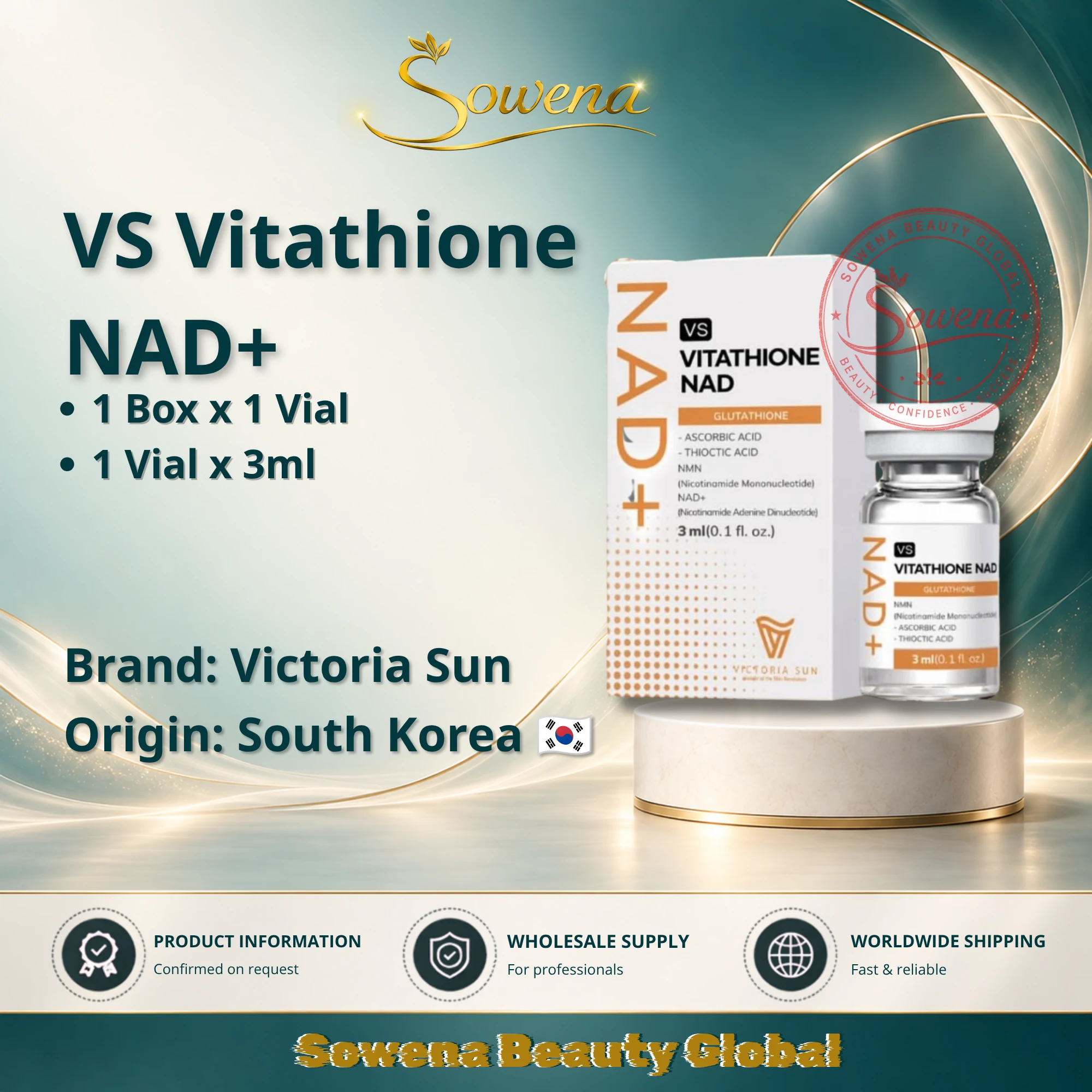
The Sowena-approved artwork shows VS Vitathione NAD+ by Victoria Sun, with South Korea stated as the country of origin. It displays one box with one 3 ml vial. The front of the box visibly names glutathione, ascorbic acid, thioctic acid, NMN and NAD+.
A product image is useful for identification, but it is not a substitute for the complete formula, concentration data or current professional-use documentation. Packaging can change. Anyone considering a professional product should ask a qualified practitioner to review the current label, ingredient information and suitability for the local market.
- Product shown: VS Vitathione NAD+.
- Brand shown: Victoria Sun.
- Origin shown: South Korea.
- Pack shown: one 3 ml vial per box.
- Names visible on the box: glutathione, ascorbic acid, thioctic acid, NMN and NAD+.
Glutathione and the idea of brighter-looking skin
Glutathione is an antioxidant naturally present in the body. In beauty conversations, it is commonly associated with antioxidant support and a more even-looking complexion. That positioning should not be confused with a guarantee that every person will achieve a lighter skin tone or a specific number of shades of change.
A better beauty goal is skin that looks rested, balanced and less dull. Pigmentation has many causes, including sun exposure, inflammation and hormonal influences. Persistent or changing pigmentation should be assessed by a qualified skin or medical professional rather than treated as a simple cosmetic colour problem.
Ascorbic acid: familiar, but formulation matters
Ascorbic acid is vitamin C, one of the best-known antioxidant ingredients in topical skincare. Daily vitamin C products are often chosen to support a brighter-looking tone and help protect the routine from environmental oxidative stress. Stability, concentration, packaging and tolerance all affect how a vitamin C product behaves.
The name on VS Vitathione NAD+ packaging does not make this professional product equivalent to a vitamin C serum. A serum is applied topically at home; a professional-use product belongs in a qualified consultation. The two categories may share an ingredient name while differing substantially in formulation, intended use and safety considerations.
Thioctic acid and antioxidant-focused routines
Thioctic acid is another name used for alpha-lipoic acid. It is discussed in skincare for its antioxidant properties. For readers, the practical lesson is that antioxidant ingredients work best as part of a complete routine rather than as a reason to neglect sunscreen, moisturising or gentle cleansing.
More antioxidants do not automatically mean better results. Sensitive skin can become uncomfortable when several strong products are layered at once. Introduce daily-care actives gradually, monitor redness and stinging, and simplify the routine when the skin barrier feels disrupted.
NMN and NAD+: understand the scientific boundary
NAD+ is a coenzyme involved in cellular energy metabolism, while NMN is studied as one of its precursors. This biological relationship explains why the terms appear in modern longevity and skin-revitalisation marketing. However, a general biological mechanism does not prove the visible results of a specific cosmetic or professional product.
For a closer explanation of the category, read the VS NAD+ professional product guide and compare it with the VS PNAD+ skin-quality guide. The responsible approach is to separate basic NAD+ science from product- specific evidence and to avoid promises of reversing ageing or permanently changing skin biology.
Realistic visible goals for a glow-focused routine
A glow routine should be judged by changes that can be observed without exaggeration. Useful goals include smoother-looking texture, less visible surface dryness, a more rested appearance and a complexion that reflects light more evenly. These goals are different from treating a medical skin condition or guaranteeing permanent pigment change.
- Hydration: well-moisturised skin usually reflects light more evenly.
- Texture: a gentle routine can reduce the rough appearance caused by surface dryness.
- Tone: consistent sun protection helps prevent avoidable darkening and unevenness.
- Comfort: calm skin often looks healthier than skin irritated by too many actives.
- Consistency: gradual improvement is a more useful measure than an instant transformation claim.
A simple daily method for supporting skin glow
Professional products cannot replace daily habits. Begin with a gentle cleanser, a moisturiser suited to the skin type and broad-spectrum sun protection. When the barrier is comfortable, one appropriate antioxidant or tone-supporting topical product can be added. Avoid starting vitamin C, strong exfoliating acids and retinoids all at the same time.
Sleep, hydration, smoking, stress and sun exposure also influence how fresh the skin looks. A practical routine should be easy enough to follow every day. If pigmentation, sensitivity or acne is persistent, professional assessment is more valuable than repeatedly changing products.
How VS Vitathione NAD+ differs from common glow products
A topical vitamin C serum, a moisturising skin booster, an exfoliant and VS Vitathione NAD+ belong to different product categories. Topical serums support daily care. Exfoliants focus on surface cell turnover. Hyaluronic acid products are commonly discussed around hydration. VS Vitathione NAD+ is presented as a professional product combining several highlighted antioxidant and NAD+-related names.
The best category depends on the actual concern. Dry, flaky skin may benefit most from barrier support. Uneven texture may require a carefully introduced topical routine. Professional options should only follow a consultation that considers skin history, sensitivity, expectations and local professional-use requirements.
Extra care for sensitive or reactive-looking skin
Sensitive skin needs a slower approach to brightening. Before adding a new daily-care active, keep the basic routine stable and introduce only one change at a time. Fragrance-free moisturiser and consistent sunscreen may provide more visible value than repeatedly switching between strong glow products. Stop using a topical product that causes persistent burning, swelling or worsening redness and seek appropriate professional advice.
Sensitivity also matters when discussing professional products. A qualified consultation should review previous reactions, current skincare, medications and the condition of the skin barrier. Ingredient popularity alone cannot determine whether a product is suitable for an individual.
Official brand and Sowena community links
Victoria Sun's official website confirms the company and its professional product portfolio, but a dedicated official Vitathione NAD+ page was not available when this guide was prepared. Product-specific details should therefore be confirmed from current documentation rather than copied from third-party sellers.
Explore the Sowena product catalogue, learn about Sowena Beauty Global, or use the contact page for product guidance.
- Instagram See Sowena product visuals and beauty updates.
- WhatsApp Ask for guidance about glow-focused product categories.
- Telegram community Join the Sowena beauty community.
Approved product visual
FAQ
Which ingredients are shown on VS Vitathione NAD+ packaging?
The approved packaging visual lists glutathione, ascorbic acid, thioctic acid, NMN and NAD+. The complete current formula should be confirmed from official product documentation before any professional decision.
Is VS Vitathione NAD+ the same as a daily vitamin C serum?
No. It is presented as a professional-use skin booster, while a vitamin C serum is a topical daily-care product. They should not be treated as interchangeable.
Can VS Vitathione NAD+ guarantee brighter skin?
No product should be presented as guaranteeing a particular result. Visible tone and glow depend on the product, skin condition, sun exposure, routine consistency and qualified professional assessment.